“Dear Father in Heaven, I’m not a praying man, but if you’re up there and you can hear me, show me the way.”
George Bailey

I don’t believe I’ve watched one particular movie more often then I’ve watched It’s a Wonderful Life.
Each Holiday season, I’m reminded that the torture I get to inflict on my family by subjecting them to this 1940’s black and white classic is the “gift that keeps on giving” for me. My sister shares my love for this movie but, others? Eh, debatable. They make an effort and they play along with the tradition.
Nevertheless, each year, I curl up on the couch, pour a strong drink and hit “Play” – trying my best to hide the hurt deep in my soul when they roll their eyes at the opening credits and then commence to fall fast asleep before Clarence even makes his grand entrance. One of these days, I’ll breakthrough their cold, dead hearts. Until then, whether it’s the 50th or the 100th time I see it, I’ll bawl uncontrollably when the closing credits roll. (Like Pavlov’s dog, cue up some “Auld Lang Syne” and my chin instinctively starts to quiver).
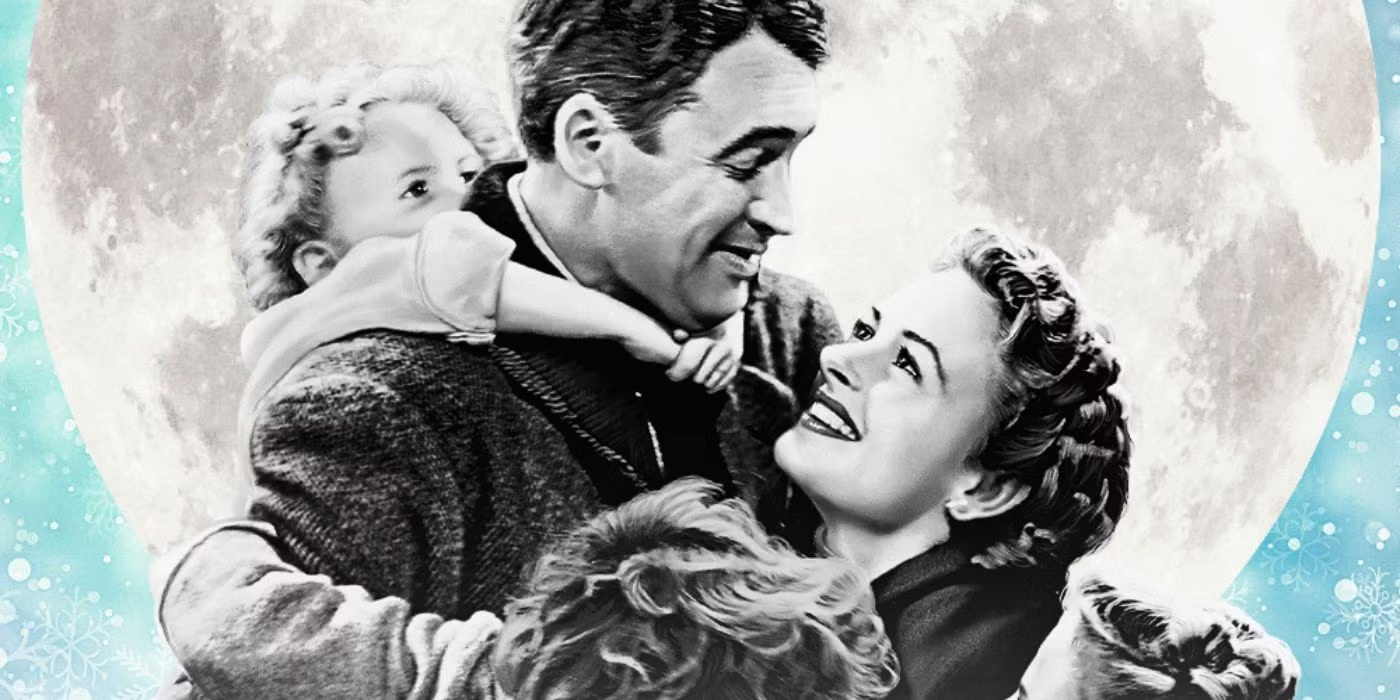
What exactly is it that connects me so deeply with this particular movie?
I think maybe it’s that so many of us can relate to ol’ George Bailey. I sure know I can. When we are first introduced to him, George is a vibrant young man with big hopes and big dreams. George is ready to conquer the world, build things, travel, make his mark on the world and strike out into the great unknown – seeking fame, fortune and adventure along the way.
I was a young George Bailey once. But… that’s often not how life works for us humans as we navigate the real world. Like so many of us, George elects to put the needs of others before his own, ultimately sacrificing his personal ambitions to stay and run the family business right there in boring, little Bedford Falls. As the days drag on, George starts feeling the same growing sense of frustration and resentment that many of us experience. George is anxious. He feels overwhelmed, trapped in someone else’s story and deeply unfulfilled. He struggles with the conflict between his personal desires and his sense of obligation. He suffers from moments of despair and real mental health issues. He’s lost his way and can’t seem to recognize the value in his seemingly ordinary life. I think many of us can relate.
George finally achieves personal enlightenment thanks to some help from his guardian angel. (“My mouths bleedin’ Burt! My mouth’s bleedin’”) In the end, George’s life serves as a reminder that true wealth lies not in material possessions or grand achievements, but in the love and connections we share with others.
Quite the lesson all of us would do good to remember. It’s such a spectacular movie (regardless of what my kids think).
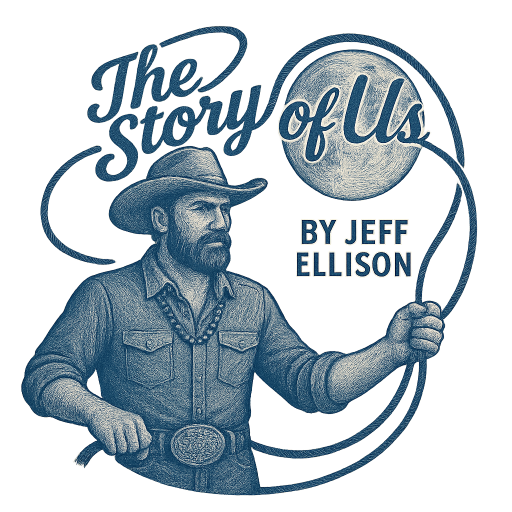
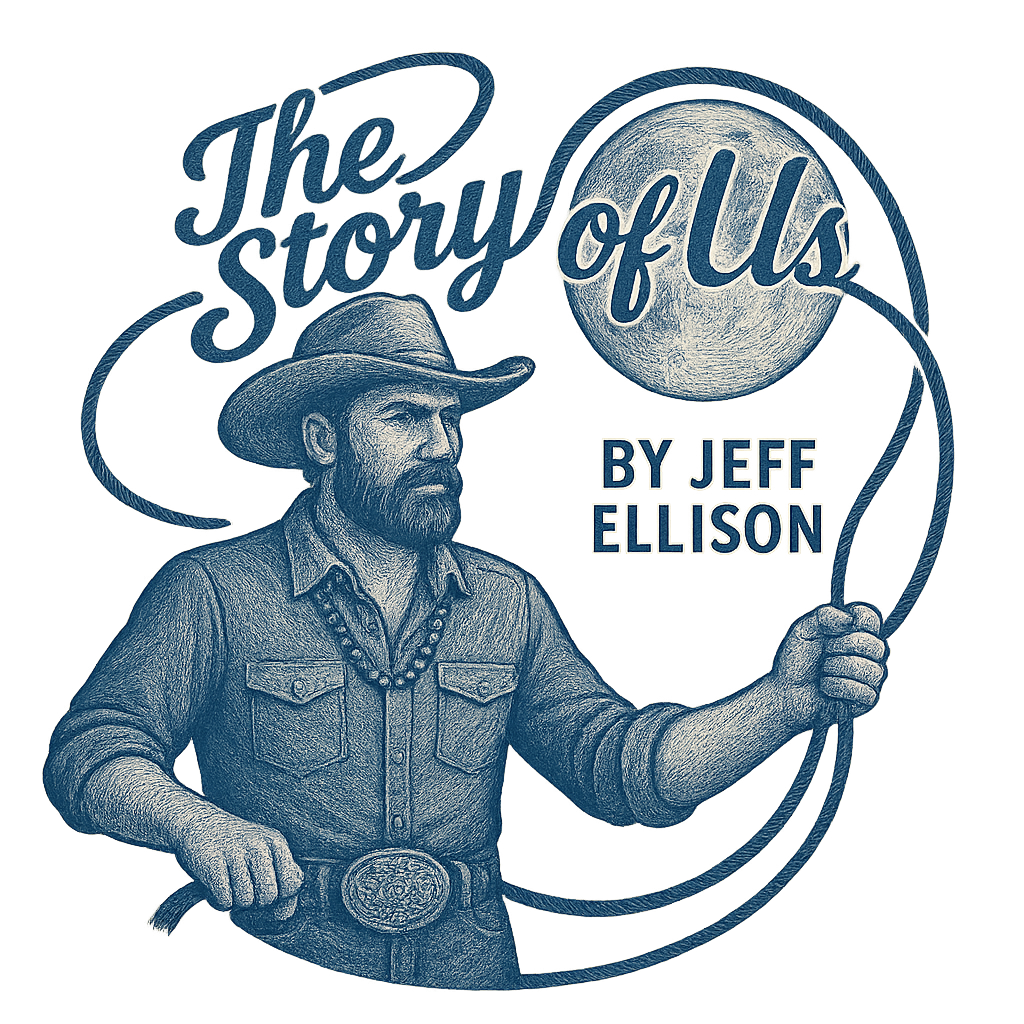
For this post, I want to dig in on one specific part of this movie that has always nagged at me from the background. It’s a small but meaningful part of the story and one that I’ve under estimated until now. I started contemplating this part of the story when, only weeks ago and unsolicited, my daughter helped me create the branding for The Story of Us. The minute she showed me her first draft logo, I was sold. She nailed it. The logo immediately reminded me so much of It’s a Wonderful Life that I’m starting to believe she may like it more then she will admit. At minimum, something subconsciously is working on her.
Few cinematic moments capture the fragile beauty of hope and longing like the moonlight stroll shared by George and Mary on their way home from the dance. During this scene, George famously asks Mary, “What is it you want, Mary? What do you want? You want the moon? Just say the word and I’ll throw a lasso around it and pull it down.” This line is almost dreamlike in its innocence. But, beyond its romantic whimsy, the story of lassoing the moon serves as a powerful symbol in this masterpiece— encapsulating themes of sacrifice, yearning, and the quiet heroism of an ordinary life.
When George offers Mary the moon, he’s not just waxing poetic in hopes of getting past first base. The moon represents all the things George wishes he could give her – in addition to all the things he himself longs for but feels are out of reach. At this point in the film, George still clings to dreams of leaving Bedford Falls, of becoming an architect, of building airfields and skyscrapers.
The moon acts as a stand-in for George’s desires. Things like freedom, ambition, and wonder—everything George believes his life could be if he escapes the gravitational pull of his small town.
The real beauty of George’s promise to Mary lies in its impossibility. Everyone knows he can’t lasso the moon, and deep down, he knows it too. But his willingness to dream it, to offer it, speaks to the size of his heart. It’s this expansive love, this instinct to give of himself entirely, that forms the core of his character—a character I am trying hard to emulate as I struggle to be a better version of myself – Dad, Employee, Husband, Friend.
As the film moves on, George finally reaches his breaking point. His dream of lassoing the moon seems laughably distant. Faced with financial ruin and convinced he’s failed everyone he loves, he believes his life has amounted to nothing. It’s all been done. Nothing left to do but hurl himself off the icy bridge and ends his life.
But this is the turning point the movie builds toward: showing viewers for over 85 years, that it is not grand accomplishments that define a wonderful life, but the accumulation of small, selfless acts. George may not have thrown a lasso around the moon, but he’s built homes, saved jobs, given people dignity, and helped a community thrive.
The promise he made to Mary wasn’t about achievement—it was about love. And it’s that love, returned to him tenfold in the film’s closing moments, that saves George from the pit of misery.
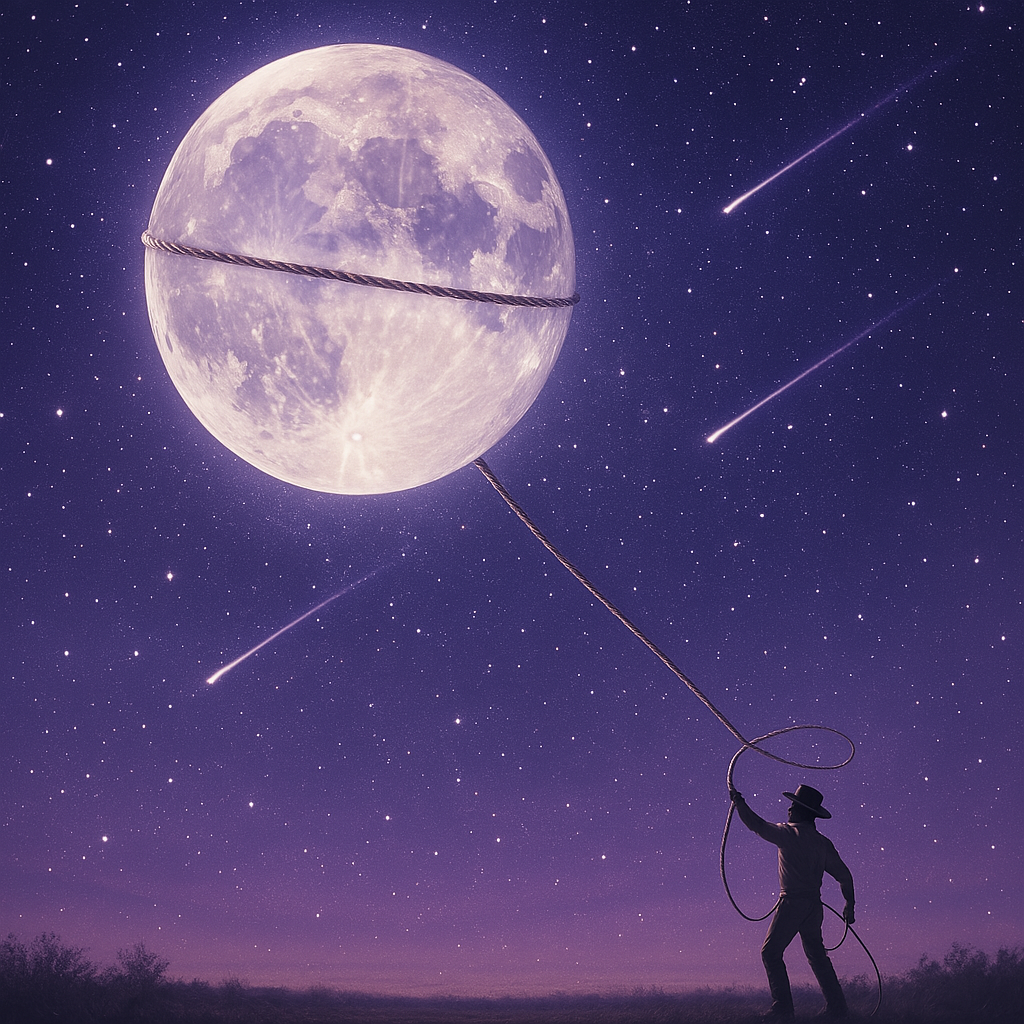
<SPOILER ALERT> George never escapes Bedford Falls. He never becomes a famous architect or travels the world. But in choosing to stay, to love, to serve, he lassoes something far greater than the moon: he creates a life of meaning. The lasso becomes symbolic not of capturing the unreachable, but of binding oneself to what matters most- holding on tight to a life worth living.
In a 21st century world that so often equates value with achievement and success with notoriety, It’s a Wonderful Life reminds us that a life lived with love, compassion, and quiet courage is more than enough.
Even in the movies, we can find examples of comparative mythology. Human history is chocked full of stories like this wherein the moon symbolizes longing, love, and the pursuit of the unreachable. These myths often reflect deep human emotions and universal truths, especially our desire to connect with something larger or more beautiful than ourselves. You know… when the moon hits your eye like a big pizza pie? That’s amore.
The Greeks gave us the story of Selene and Endymion. A story about eternal, everlasting love in the face of impossibility. The moon goddess, Selene, falls head over heels in love with the mortal Endymion, a poor shepherd. She visits him each night while he sleeps in an eternal slumber—granted to him so he may remain youthful forever. Their love is real but suspended in a timeless, unreachable space. Like George’s dream of escape and adventure, Selene’s love is idealized -perhaps perfect in fantasyland but unreachable in reality. Both stories speaks to man’s desire to preserve a dream, even if it cannot come fully alive.
In other traditions, the stories told are of a rabbit who is said to live on the moon, placed there as a reward for a selfless act. In the Aztec version, the god Quetzalcoatl, disguised as a man, is offered food by a rabbit who sacrifices itself. Moved by the rabbit’s humility, Quetzalcoatl places it forever on the surface of the moon to be remembered forever. The rabbit’s story mirrors George’s self-sacrifice. George gives up his dreams to help others, and like the rabbit, his impact becomes enduring, even if it’s not celebrated in the way society typically honors success.
In one Maori legend, the moon asks the forest god Tane to join her in the sky, but he refuses, choosing to remain on Earth. His rejection causes a rift, and the moon becomes cold and distant. What’s the connection to our hero Mr. George Bailey? Tane’s choice parallels George’s decision to stay in Bedford Falls rather than chase his dreams among the stars. In both stories, the “sky” represents escape and grandeur, while the “earth” symbolizes duty and grounded love.
Just like in It’s a Wonderful Life, these stories are less about lassoing the moon and more about what the longing itself reveals about us. The moon reflects our highest ideals and deepest sacrifices—and shows us that even if we can’t have the dream, the dream shapes who we become and it’s the pursuit of this dream that makes our days on Earth meaningful.
Isn’t it true that what makes life so grand is not the achievement of perfection but our unwavering human efforts to reach perfection knowing it’s impossible? **Credit: Peyton Ellison – Sacred Heart Commencement Speech, Class of ’23.
So, there you have it. The lassoed moon in It’s a Wonderful Life and the lassoed moon in the logo for our project. Perhaps they are sending the same message out to humanity from across time and space: Shoot for the Moon! Even if you miss you will land among the stars.” I wish I had a million dollars…Hot Dog!
“Strange, isn’t it? Each man’s life touches so many other lives. And when he isn’t around he leaves an awful hole, doesn’t he?”
My Main Man (Clarence)
 The Story of Us.