
Reflections on a recent podcast episode with Molly Cassaro Jones. If you or someone you know is struggling, please call, text or chat the 988 Lifeline.
Connecting with someone can help save your life

I know how hard life feels in 2025. I know the pace, the pressures, the balancing act it all demands. Humans are now living smack dab in the Modern Age. Our lives are controlled by rapid technological advancement and a new global connectedness. Billions of people across the globe are engaging in “conversation” at a rate that far exceeds anything in human history.
Yet, when it comes to our innermost struggles—depression, despair, suicide—something strange happens: the conversation goes silent.
Picture this.
You’re meeting up with some buddies to go see the new holiday blockbuster. You’re waiting for your tickets and a friend walks over, rubbing her shoulder. You ask her what’s the matter? She says, “I injured my shoulder the other day and it’s still hurting.” Totally normal, right?
Now imagine that another friend joins your crew. This one seems a little down in the dumps. You ask him what’s the matter? He says, “My seasonal depression is back and it’s been making me feel low.” That should be totally normal too.
But for most of us humans, we may be comfortable sharing our political beliefs or our favorite recipes, but talking about mental health is somehow just too taboo. We don’t know how to respond when others talk about it. Or we tense up at the mere thought of talking about it ourselves.
Your mental health is just as important as your physical health. It’s just as important to treat it with respect. To talk about it. To seek treatment for it.
I know not everyone is as open to explore this topic as they really should be. It’s unfortunate because, just like how an open wound can lead to infection, untreated depression or anxiety can lead to much bigger problems if not addressed.
In my recent conversation with Molly Cassaro Jones, founder of The Pete Foundation, she shared her story and some insights into her lineage- a family of helpers who courageously stood up when it would have been far easier to remain silent. However, when her son Pete tragically died by suicide at the young age of 23, that remarkable bravery confronted one of society’s most challenging stigmas. With deep emotion, Molly expressed to me:
“He had a way of making everybody around him comfortable.”
“I said, ‘Pete, why are you not going to class? What’s wrong?’ And he said, ‘Yes. I’m depressed.’”
These simple words—spoken between neighbors around my kitchen table—remind us how rare it still is to hear someone say aloud what they feel. But, Molly is turning profound loss into a catalyst for change. Her family’s mission at The Pete Foundation is to start rallying communities to champion youth mental health and wellness. They’re working to normalize the topic, promoting education and providing tools for healthy emotional development.
Sadly, Pete was only able to convey the depth of his pain in a letter discovered after his death. Now, the Jones Family and their supporters are fighting to ensure that no person will have to suffer silently in the way Pete suffered.
The Crisis Behind the Silence
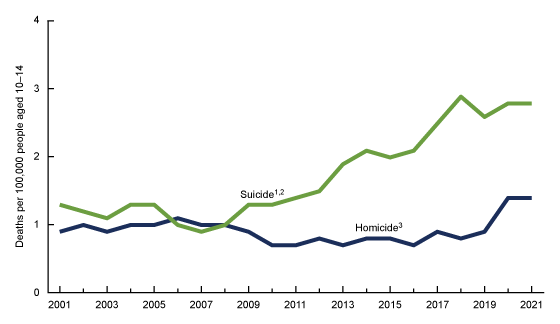
*Note- Facebook launched in 2004. Twitter followed in 2006. Instagram in 2010 and Snapchat soon thereafter in 2011.
The data show we are far from ok—and our unwillingness to talk about it is making things much worse.
- The CDC reports that nearly 40% of U.S. high-school students experienced persistent feelings of sadness or hopelessness; about 20% seriously considered attempting suicide, and ~9.5% had made an attempt to take their own life.
- For children and young adults, mental health issues are increasingly common—and yet many remain undiagnosed or unaddressed.
- Mental health problems are starting to manifest earlier in life, 50% of mental illnesses begin by the time someone is just 14 years old. and;
SUICIDE IS THE LEADING CAUSE OF DEATH AMONG YOUNG PEOPLE .
Not Accidents. Not Homicide. Not cancer or heart disease. Suicide.
As Molly teaches us, early intervention is of the utmost importance.
“There is on average an 11-year gap between the onset of mental-health symptoms and the beginning of care.”
We can do better. We have to do better. This delay in getting help is often caused by the shame and discomfort of speaking up- but creating a safe place for our children to feel comfortable speaking up could be the catalyst we need to start reversing the trend.
We Seem to Talk about EVERYTHING, so Why Don’t We Talk about Mental Health?
There are lots of reasons, I guess, but the threads run deep:
- Fear of being imperfect. Perhaps we’re scared that our problems aren’t big enough or, maybe, we’re scared that our problems aren’t valid when compared to others. When we believe suffering isn’t worthy of attention, we stay silent and isolate.
- Stigma and shame. Admitting we’re struggling feels like admitting we’re broken. But, can’t we all agree that asking for help is courageous? Talking openly about mental health is one of the first acts of healing.
- Lack of language and safe spaces. Molly and I spoke a little about this too:
“From society we don’t learn the words we feel… We don’t raise children to understand how to describe how they’re feeling.”
Without the right words, the feelings stay hidden, locked away in the depths of our hearts where they silently brew and linger, longing for expression and understanding. We end up feeling isolated, misunderstood and hopeless.
- Cultural Inertia. We live in a world that prizes “pulling yourself up”, “not letting ’em see you sweat”, and “just dealing with it”. We silence the storm within, convincing ourselves that expressing vulnerability is a sign of weakness- that enduring hardship alone is heroic. This keeps us from seeking the help we need and stifles open conversations about emotional struggles.
Normalizing Conversation Matters
When we bring what’s hidden into the light, we shift the entire trajectory.
Conversation = Connection. When someone asks a real question—“Are you thinking of ending your life?”—they open a door. Molly emphasized:
“If we were more comfortable asking that question… we become more comfortable talking about mental health.”
Conversation = Healing. When mental health is treated like any other health issue, the stigma fades and care becomes more accessible. This shift in perspective invites open, honest dialogue, allowing us to share our feelings and seek support without fear of judgment.
It’s Not Mental Health. It’s Just Plain Ol’ Health.
Let’s begin to normalize talking about mental health. Let’s empower young people to prioritize their well-being. Just as importantly, let’s foster an environment where mental health is recognized as a natural part of overall wellbeing – like brushing your teeth every day or getting a routine check up.
Simple Steps to Start the Conversation
Here are practical, everyday ways you can help “stomp the stigma”.
- Ask the hard question. You don’t have to wait until someone is obviously in crisis. Try: “How are you really doing? What’s been on your mind lately?” or “I’ve noticed you’ve seemed quieter. Are you thinking about ending your life?” (Yes, the direct question helps.) Molly says asking “Have you thought about a plan?” is a crucial next step.
- Listen with your heart, not your checklist. Avoid jumping in with solutions too fast. Just be present. Let silence be ok. Reflect what you hear: “It sounds like you’re feeling… (fill in) …I’m here.” You humanize them and can turn their suffering into an opportunity for deep, personal connection.
- Normalize the help-seeking path. Talk about mental health the way you do about a sprained ankle. Encourage: “It takes courage to reach out.” and just as importantly, “You don’t have to do this alone.”
- Share resources. Molly and her foundation teach the QPR model (Question, Persuade, Refer) so that if someone says yes to “Are you thinking of ending your life?”, you’ll know what to do next.
- Make the environment safe. Whether at home, work, or school: Ignite the power of connection through regular check-ins that transcend the mundane “How was your day?” Dive deep with open-ended questions, and create a sanctuary where everyone feels empowered to share their feelings.
- Build real, honest HUMAN-TO-HUMAN connections: Connectedness is a protective factor. Your teen may have 2,000 Instagram followers, but how many real and present humans can they trust with a honest conversation?
- Show you’re comfortable with vulnerability: share something small of your own. Don’t we all struggle with mental health from time to time? Teens especially need to know that you may (even in a small way) understand how they feel. That others have felt the same way. That they aren’t alone.
Let’s Talk… so Those in Silence Don’t Stay There
We simply can’t let another generation grow up believing their pain must stay hidden. I believe all humans suffer… if we’re honest, we all suffer from mental-health issues at some point in our story. Molly’s work with the Pete Foundation reminds us:
Talking saves lives. One story, one question, one genuine conversation at a time.

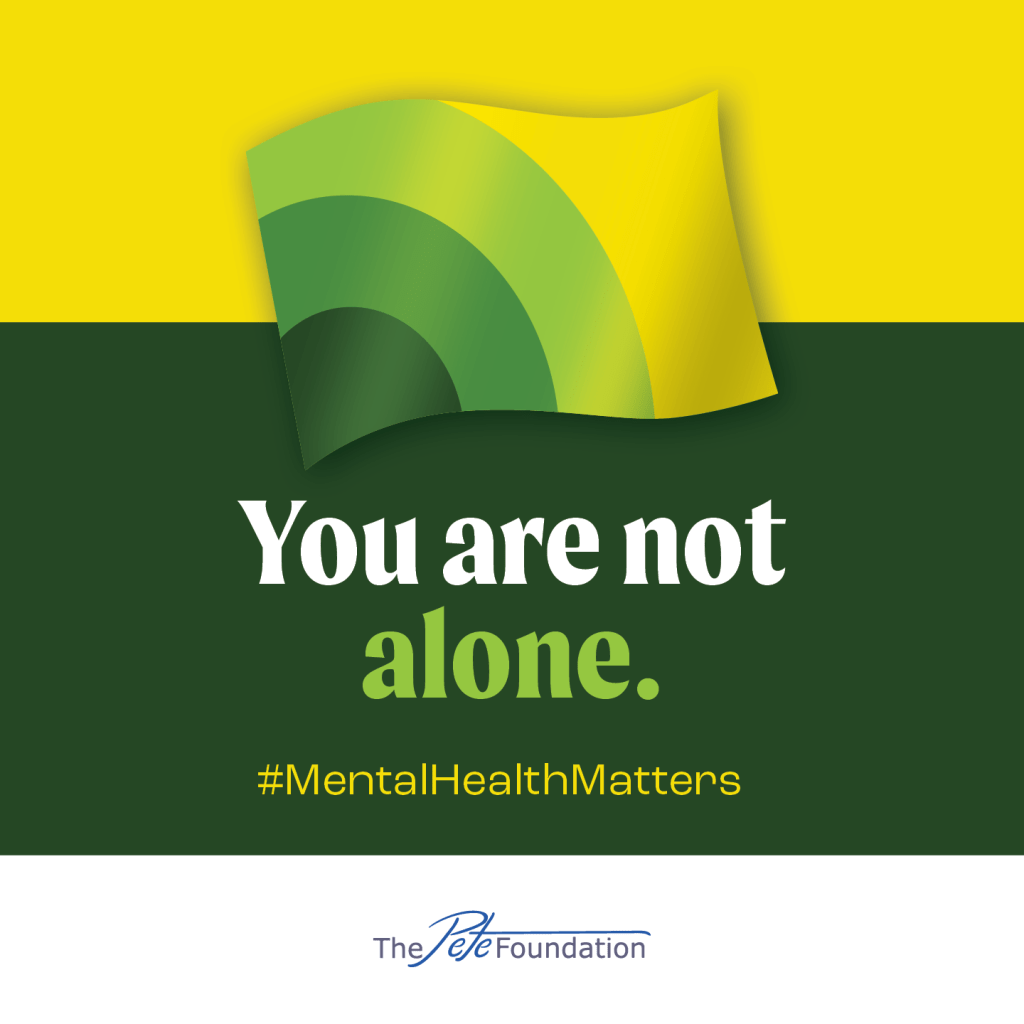
Start today. Visit http://www.thepetefoundation.org, buy a flag. Raise that flag proudly in your community and help raise awareness. “The mental health flag is more than just a symbol – it’s a statement of visibility, solidarity and a commitment to revolutionizing mental health care”.
Together and with this flag, we will bring mental health out of the darkness and into the light.
 The Story of Us.
Leave a comment