





1975 to be exact. A pivotal year in technological innovation. The equivalent of the Big Bang. The year that Bill Gates and Paul Allen founded Microsoft intending to write software for the new Altair 8800 personal computer. The year Atari introduced Home Pong and ruined family harmony forever. The year Sony introduced the Betamax video cassette recorder for the low, low price of $2,295 — which in today’s dollars is roughly the cost of a used Honda Civic.
Since my birth, I’ve been through it all.
- I’ve used a quarter to call home from a pay phone.
- I’ve navigated entire cities, states and foreign countries with a paper map and blind optimism.
- I’ve returned a page from a SkyTel pager – which was peak 1990’s swagger
- I’ve taken photographs not knowing how shitty they were until I had them developed weeks later.
- I’ve put needle to a vinyl LP, blown in a Nintendo cartridge, rewound a cassette tape with a #2 pencil and repaired scratched compact discs with a highlighter. (don’t ask me how it worked, but somehow it did)
- I’ve set the VCR to record so I didn’t miss an episode of the A-Team or Miami Vice.
- I was kind and did, in fact, rewind my Blockbuster rentals (most of the time)
- I’ve owned actual calculators and actual flashlights – kept a written planner, calendar and address book.
- I’ve read newspapers, had magazine subscriptions and stiffed Columbia House for free CD’s more then a few times.
- Hell, I’ve even been required to carry cold, hard cash and drive across town to make my purchases from stores.
So look… if I sound a little fried, it’s because my generation has been asked to adopt, adapt to, and interface with more brand-new technology in 50 years than any humans in history. By a lot.
And honestly?
I’m tired.
I’m getting old.
And I’m throwing out the SOS signal.
So today, we’re going to dig in and explore what’s really happening to all of us — why our brains feel so flooded — and how we can break some habits that are slowly drowning us.
Alright. Deep breath. Let’s get into it
The Information Deluge: Why Your Brain Feels Flooded (and How to Breathe Again)

If you’re like me, by the time your head hits the pillow, your brain feels like a bowl of oatmeal in a steel cage. I like to blame my smartphone, email inbox and social media but, perhaps technology and our devices aren’t my real problem.
Maybe it’s the relationship I have with them?
I wake up each morning to the alarm on my smartphone – charged and ready and always by my bedside. I then decide what to do next: pee, check my phone or check my phone while I pee. I barely wake up, and before my coffee cools, the tidal wave has already crashed over me—pings, posts, emails, push notifications, news alerts, advertisements for crap I don’t need. Once it starts, it doesn’t stop.
Our ancient brains, built for dawn light and birdsong, now swim every day in an ocean of bits and bytes. No wonder we feel under water, anxious and overwhelmed. We’re just not evolved to process information like a supercomputer. Something has to give.
Let’s rewind a bit and see how we got here.
A (Short) History of the Human Data Diet
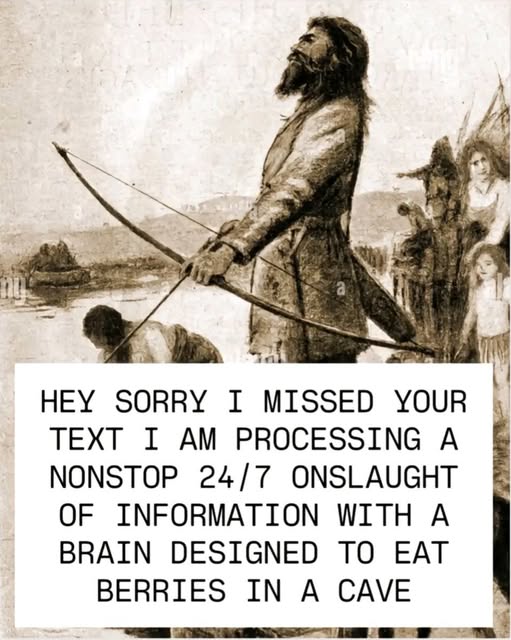
Picture humanity’s relationship with information as a three-act play — a long, slow prologue followed by two plot twists so abrupt they rattled our species to the core.
Act I: The Oral & Local Era
Most of human history
For tens of thousands of years, everything you “knew” came from the natural world and other Human Beings: a neighbor’s warning, a hunter’s tale, the color of the clouds, the way the ground felt before a storm, the sound of approaching hooves.
Information was intimate, slow and digestible. You took your gentle cues from the ebbs and flows of of the world around you. Knowledge traveled at the speed of footsteps, speech and memory.
We evolved in this way for thousands of years — in a world where the signal strength was weak. Your daily “feed” was your village — maybe 150 humans max — and honestly, that was plenty.
Act II: The Print & Broadcast Explosion
(Roughly the last 500 years)
Then came Gutenberg — the OG technology disruptor — and the quiet world of ink and paper violently multiplied. Europe leapt from a few thousand hand-copied manuscripts to nearly nine million printed books by the year 1500. Ideas no longer strolled down an ancient Roman roadway; they stampeded across whole continents and cultures. Information crossed borders and ideas accelerated humans through the Renaissance, past the Scientific Revolution and into the Age of Enlightenment.
By the 20th century, a voice transmitted through copper wire suddenly claimed four full hours of your day. Radios became hearths our family circled around for information and entertainment. Not long thereafter, in the 1950’s, television became the new campfire story, broadcast not to dozens but to millions of viewers. Our world got louder — but still at a pace we could handle.
Act III: The Digital & Omnipresent Deluge
(The last 40 years — the blink of an eye)
Act III didn’t just arrive — it blasted through a wall like the Kool-Aid man. Communication, technology and computation didn’t casually evolve; they went straight from “0” to “Warp Factor 1” before we knew what hit us.
Data didn’t grow. It detonated— bursting across the planet like confetti cannons at a parade. In the late 1990’s, I got my first email address through the University of Kentucky and trekked to the library (flip phone in my pocket) to check the few messages I received each week from professors. It wasn’t long before my roommate got an Apple computer and I can recall vividly the pings and dings of our AOL dial up connection screaming like a robot melting down- those first internet images slowly uploading on the screen.
Technology erupted in the 2000’s.
By 2007, we were already drowning in 3×10²⁰ bytes of data and transmitting 2×10²¹ bytes annually. And that was quaint compared to now. Today, we create hundreds of millions of terabytes every 24 hours.
We no longer just encounter information; we swim in it, choke in it, drown in it. It follows us into every room, every moment, every small break in the action. It’s omnipresent — a second atmosphere pressed against us at all times.
Suddenly, your village is now the entire planet, whispering, shouting, broadcasting, and algorithmically amplifying itself into your mind every waking moment. If a small tragedy occurs in one part of the Globe or a minor catastrophe happens in another, humans all over the world can read about it or relive it over video in mere minutes. Worse yet, we’re hardwired to empathize and absorb all that human suffering.
It’s not healthy and our ancient brains are doing their best to keep up.
The Currents You’re Swimming Through
- The modern human brain processes about 74 gigabytes (GB) of data daily
- This is the equivalent of watching 16 movies. Every day
- Our information overload is driven by relentless and constant input, with media exposure occupying an average of 11–12 hours per day.
- Teens commonly see 200+ notifications/day; Adults average dozens from mobile apps alone—each a micro-tax on our attention span and absorption capacity.
- Meanwhile, the sea itself is rising. The world creates more and more data every second—an ambient, always-on churn that is beyond human scale.
Our intake capabilities and the environment’s output have diverged. The result feels like cognitive high tide—even before we add misinformation, disinformation, artificial Intelligence surges and bot farm barrages to the swell.
Misinformation is Especially Overwhelming
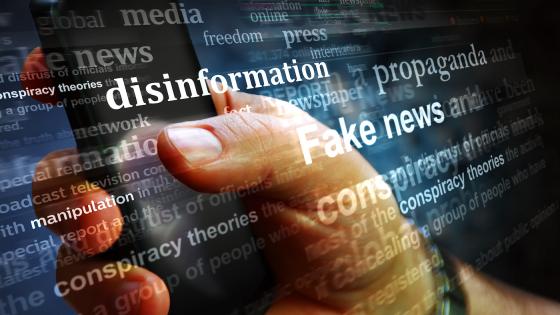
Falsehood doesn’t just compete with truth. It sprints ahead, leaps farther, crashes deeper, and echoes louder. A lie laps the truth. Twice (and then posts a victory dance on TikTok). False news doesn’t trickle out—it pressure washes us. Research shows that falsehood spreads “farther, faster, deeper, and more broadly than the truth,” often by an order of magnitude. In fact, falsehoods were found to be roughly 70% more likely to be reshared than true stories.
During the COVID pandemic, the global flood of conflicting data, rumors, and outright lies became so overwhelming that the WHO coined a term for it: an “infodemic.” This wasn’t simply more headlines — it was a tsunami of words, images, claims, and fears. Official truths, half-truths, and dangerous fabrications all jostled for attention in the same stream, making it nearly impossible for ordinary people to separate signal from noise.
And the infodemic didn’t vanish with COVID. Instead, it morphed — amplified by new tools and technologies: AI-generated images and videos, deep fakes, sensational headlines engineered to go viral, and algorithms hungry for engagement. In fact, Oxford’s 2025 Word of the Year? “Rage-Bait” – defined as online content deliberately designed to elicit anger or outrage.
When you combine platforms optimized for novelty and speed with human brains wired for emotion, surprise, and shortcuts, you create a perfect storm.
The result? The more we scroll to “keep up,” the more unmoored we feel. The more we consume, the less certain we become.
This isn’t just about occasional fibs — it’s about trust, reality, and the social bonds that depend on them. When falsehoods spread faster than facts, when every image, video, or post could be doctored or distorted, faith in what we read or hear online becomes a luxury. In that world, discernment becomes survival and humans can simply no longer believe ANYTHING we see or hear online.
So… How Do We Cope without Retreating Into a Cave?
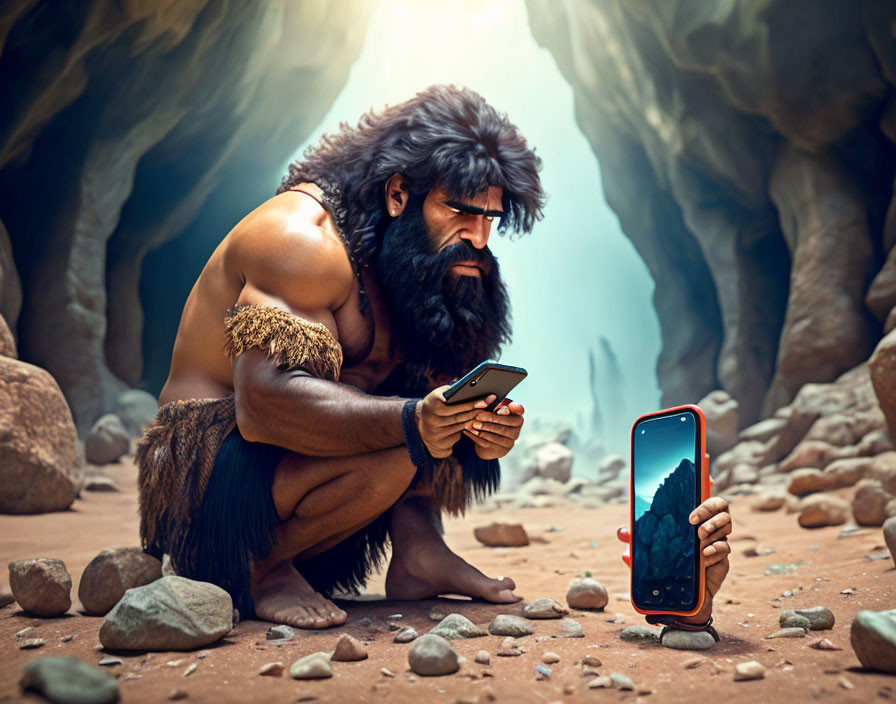
If you’re feeling the urge to chuck your phone into the nearest river and adopt a cave man lifestyle, you’re not alone. The digital world is loud. It’s needy. I understand how you feel. Look, the temptation to go full hermit is real.
But since most of us can’t disappear into the woods and live off berries, let’s talk solutions.
Let’s start to take control and make good choices.
We’re not powerless.
We’re just overwhelmed.
And building better habits is how we reclaim the driver’s seat.
Treat your attention like an ecosystem. And you? You’re the park ranger.
Your job isn’t to wall off the forest. It’s to keep the invasive species from taking over. We need to shift the conversation from focusing on the barrage of information and the devices themselves toward what our relationship is with both.
- Start Your Day in a Positive Way
Don’t laugh, but I say this to myself each morning when I get out of bed. Reminding myself that the early morning minutes are the best time to relax, ease into the day, have some “me time” and reflect. What’s healthier then doom scrolling Twitter? A cup of coffee, a warm blanket and a few chapters of whatever book you’re reading. The time commitment? Usually equal. Other great morning rituals include:
- A Five Minute Guided Meditation
- A walk around the neighborhood or;
- Knocking out your favorite exercise routine – feeling empowered and energized all the rest of the day.
2. Begin a “Low-Friction” Info Diet
Think of your data consumption like mealtime. Grazing nonstop leaves you bloated and cranky. But a few intentional “feedings”? That works. Also, we don’t eat meals in bed and at all hours of the night. Let’s not consume data there either.
Set two or three windows where you actually check things – and not at the same time you are enjoying and being present with a actual meal. The rest of the day? Turn off every alert that doesn’t involve an actual human needing you.
- And when you do choose to consume, pull instead of letting the world push.
- A well-curated newsletter beats an Instagram reel.
- A thoughtful, well balanced article beats a spicy hot take.
Your brain was built for vegetable soup- warm, comforting and filling, not handfuls of Skittles.
3. Learn to Filter Really Fast
In an era where anyone can manufacture a crisis in Photoshop, you need quick defenses. Try the 60-second SIFT: Stop → Investigate the Source → Find Better Coverage → Trace it Back. And when something looks sketchy? Don’t dive deeper — go sideways. Open a few tabs and see who else is talking about it. Lateral reading saves you from vertical panic.
4. Go Old School
Getting back to basics is so “retro chic” “and, it rebalances our senses. Your brain didn’t evolve for 10,000 glowing pixels screaming for attention. So give it some analog love. Paper. Pencil. Real books and newspapers. An old-school wristwatch. Maybe even a compact disc or an LP if you can find something to play it on. These are cheap, high quality nutrients for a mind that’s starved for grounding.
5. Choose a Few “Slow Media” Anchors
Pick one weekly longform piece you’ll actually savor. A podcast that makes you think instead of react. A book club that keeps depth alive in your life. Slow media is like reading by lamplight in a hurricane — a calm corner in the chaos.
Learning to Breathe Underwater
Life in the digital world is unmistakably hard. We’re writing the story of us during a technology tsunami. Whether you love it or hate it, ultimately we have to figure out how to survive alongside it and make it work for us (not the other way around). We were born for lazy rivers, not water parks and wave pools — yet here we are, standing in the great digital deluge of our age. The waters rise with every swipe, every ping, every pixel that shouts at us for our attention.
But, we’re still in control.
Floods don’t have to sweep us away.
Not if we learn to plant our feet.
Not if we learn to breathe underwater.
Every choice you make — a silenced notification, a slower read, a single focused task — is a sandbag on the levee, a small act of reclamation. Piece by piece, you begin shaping your own riverbanks. You decide what flows toward you and what flows past you.
And maybe that’s the quiet miracle of this moment:
We may not control the storm,
but we can learn to navigate it —
with intention and with each other.
If this resonated, if you found yourself nodding along or laughing at memories, I’d love for you to wade deeper with me. Join us at The Story of Us Project — on the podcast, in the blog, in the conversations we’re building one honest story at a time.
Because in a world overflowing with noise,
choosing what — and who — you listen to
might just be the most human act left.
Let’s find the signal together.
 The Story of Us.
Leave a comment