Some days we treat ourselves like computer devices—charging overnight, powering through daylight hours, running task after task until something inside of us glitches. We freeze, we begin to lag, then eventually…we crash. At the end of the day, our brains feel like the rainbow colored spinning wheel of death. And somewhere along the way, the world convinces us this is normal.
But here’s the truth that we keep forgetting: We aren’t machines.
We’re Humans. You’re a Human. You’re a soul—a living, breathing, messy, emotional, often imperfect but miraculous person. You need music that loosens your shoulders, people who call you by your first name, sunsets that remind you to pause, and belly laughs that remind you –
you’re still alive inside.
Machines run.
Us Humans? We feel.
And if the feeling part has gone a little quiet lately, that doesn’t mean you’re broken. It means you’re overwhelmed —stuck in Survival Mode in a world that rewards speed, productivity, and constant, relentless acceleration.
Modern life hums with a relentless refrain: Keep going. Don’t slow down. Do more. Be more. Produce more. > Bigger. Faster. Stronger.
But survival isn’t the point of being alive. Is it? Life isn’t supposed to feel like a battle to stay upright on a treadmill stuck a few speeds too high. It’s not something to simply endure. It’s an experience meant to be inhabited with your whole, unguarded self.
So pause.
Take a few long, slow deep breaths.
Let yourself remember what calmness feels like.
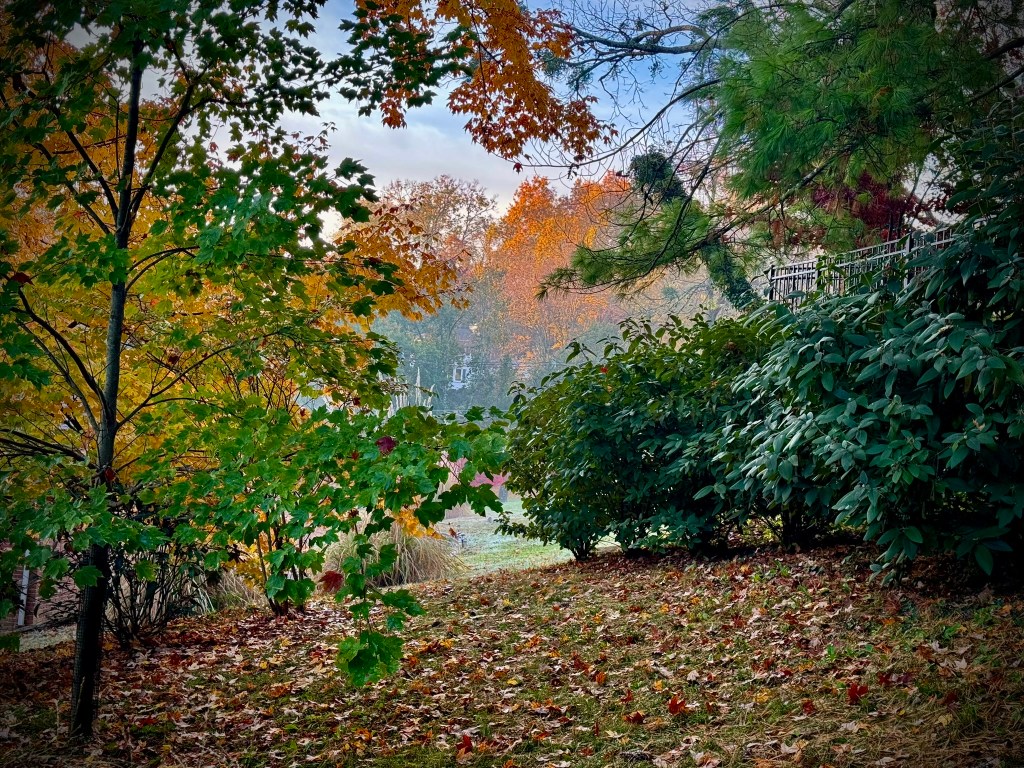
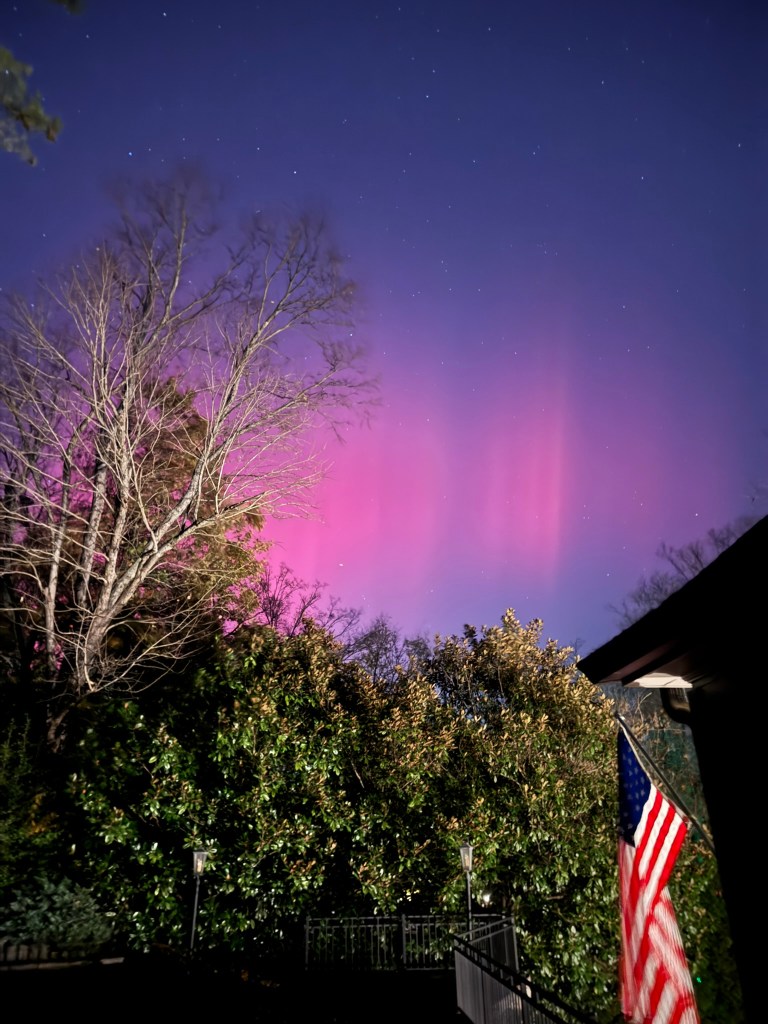
This afternoon, look up at the evening sky—its colors change each night, a free reminder that presence is the one thing capable of slowing down time. Whether you take the time to recognize it or not, the natural world is still speaking to you. It’s there to remind you:
“You’re here to live, not just hustle.”
The inbox can wait.
The grind can wait.
This moment won’t.
Life isn’t supposed to be an never-ending To-Do List. Somewhere along the way, our self-worth got tangled up in checkboxes. If we cross enough off, maybe we’ll feel like enough. But life isn’t a spreadsheet—it’s a gift.
Walk slower.
Hug longer.
Laugh louder.
Yes, the clock is ticking… But your presence is the part of you that can magically slow down the minutes. It’s true what our elders have always said, and its worth repeating: the days seem long but the years go by fast. So, why do we rush as if racing some cosmic clock, forgetting that the point of the journey is not the finish line but the living that happens in between?
The Human Hunger for “More”
Here’s the thing: humans didn’t just wake up stressed in the 21st century. This restlessness isn’t new to us. It’s ancient. Humans have always carried an anxious drumbeat inside us—a biological voice in our head that says:
“This is good… but what else can we do? What else is out there?”
We’re just not hard wired to accept the status quo. Quite the opposite. Comfort feels nice for a moment, then we start tinkering, upgrading, expanding—not because we’re ungrateful, but because human evolution rewarded the curious, the bold, the ones who asked, “What’s next?” – those where the ones that survived and advanced.
And our secret fuel? Dopamine—the brain chemical that gets blamed for every modern addiction. However, contrary to what you may think, dopamine isn’t actually about pleasure.
It’s about pursuit.
Desire.
Ambition.
Forward motion.
Dopamine fires not when we have something, but when we want something. As the author Daniel Lieberman explains in his book The Molecule of More:
“Wanting and liking are produced by two different systems in the brain, so we often don’t like the things we want.”
That distinction matters. Desire isn’t the same as satisfaction—and chasing “more” doesn’t guarantee us happiness. It only guarantees more chasing.
Once upon a time, when humans lived with scarcity and constant threat, this drive was essential. Our ancestors survived because dopamine pushed them to explore, innovate, gather, hunt, improve. As Lieberman reminds us,
“Dopamine was the engine of progress.”
And it still is. Dopamine is helping build the modern world—our technologies, our mega cities, our art, our ambitions. But that same system that once kept us alive now pushes us past healthy limits, urging us forward even when we desperately need to stop.
Throughout the Story of Us, dopamine has helped mankind:
- Leave the comfort of our caves
- Dare to cross oceans and navigate the globe
- Build marvelous cities
- Paint Renaissance masterpieces
- Invent amazing medicines
- Walk on the lunar surface, and yes…
- It even gave us social media
But, zoom out on human history and a funny (and slightly terrifying) pattern appears: We take good ideas, crank them to eleven, and run with them until they implode in our face.
- Agriculture saved us— then we farmed civilizations into dust and forgot how to survive without it.
- Coal powered progress—then it powered climate collapse and economic devastation in the rural communities that learned to depend on it.
- Automobiles gave us freedom and the supposed tranquility of suburban life—then they trapped us in gridlock and smog.
- Social media connected us— then it fractured our attention, eroded our trust, and challenged our sanity.
Humans get excited about a new tool, and before we know it, we’ve built our lives around it. Humans always know how to take a good thing and just “kill the ass end out of it”.
Especially, the things we love most—college football, liberal democracy, small, local businesses—all stretched thin by our obsession with more, faster, bigger.
If you want the ultimate analogy for our dopamine-driven tendency to push everything to extremes, look at the climate crisis.
We found fuel.
We burned it.
Then we burned more.
Then we invented machines to burn it faster.
The planet warmed.
We shrugged.
It warmed more.
We shrugged again.
Our information ecosystem has followed the same trajectory.
A little data was helpful.
More was pretty interesting.
Too much has become overwhelming.
We now suddenly find ourselves facing a cognitive crisis—a warming world of the mind.
Our attention is overheated.
Our emotional soil is eroding.
Our informational oceans are drowning us and rising beyond human scale.
Ancient Hardware, Modern Software
We like to imagine ourselves to be endlessly adaptable, but biologically speaking, humans evolve at a pace better suited to calendars carved on stone tablets. The brain you carry today was sculpted tens of thousands of years ago for a very different world: one that moved slowly, predictably, and with far fewer demands.
This gap between what we’re built for and what we’re living in has a name: evolutionary mismatch. It means our bodies and brains are calibrated for an environment that no longer exists.
For most of human history:
- We lived in small groups and made only a handful of decisions each day.
- Our stress responses were triggered by rare, immediate, real dangers like giant animals that wanted to eat us for dinner.
- Our senses were tuned to natural rhythms: sunrises and sunsets, seasonal changes, the movement of the planets around our orbit.
- And, our information stream was tiny and local.
Today, we navigate more information in a single day than our ancestors encountered in a lifetime. Our ancient wiring wasn’t designed for constant noise, endless choice, or digital audiences in the millions.
That’s where our stress systems start to falter. Our bodies still think they’re protecting us from roving packs of hungry wolves.
The sympathetic nervous system—the “fight-or-flight” mode—works beautifully when a predator crosses our path. But it wasn’t designed for the chronic, low-grade stressors of modern life: emails, social comparison, deadlines, uncertainty. Every ping, every alert, every “urgent” demand flips that same ancient switch inside your brain. Not enough to make you race up to the top of the closest tree, but enough to keep you perpetually bracing for impact.
That’s why burnout feels so physical. Your body thinks it’s saving your life—over and over and over again – and the system that should calm your nerves struggles to keep up.
Balancing stress is the job of your parasympathetic nervous system—the “rest and restore” mode that slows your heartbeat, deepens your breathing, and tells your body that everything’s gonna be OK. But this system evolved expecting long stretches of calm, cool, collected.
Modern life gives it seconds.
It can’t fully engage when we’re constantly rushing, scrolling, or reacting.
So we end up stuck between activation and exhaustion—never fully alert, never fully at ease. That’s the heart of the evolutionary mismatch: a Stone Age nervous system trying to survive in a world of perpetual alarms.
Of course we’re tired.
Of course we’re overloaded.
Of course meaning feels harder to access.
This isn’t failure. It’s Biology 101. It’s humanity trying to meet machine expectations. And understanding this is where the healing begins.
Choosing a Human Life in a Machine-Shaped World
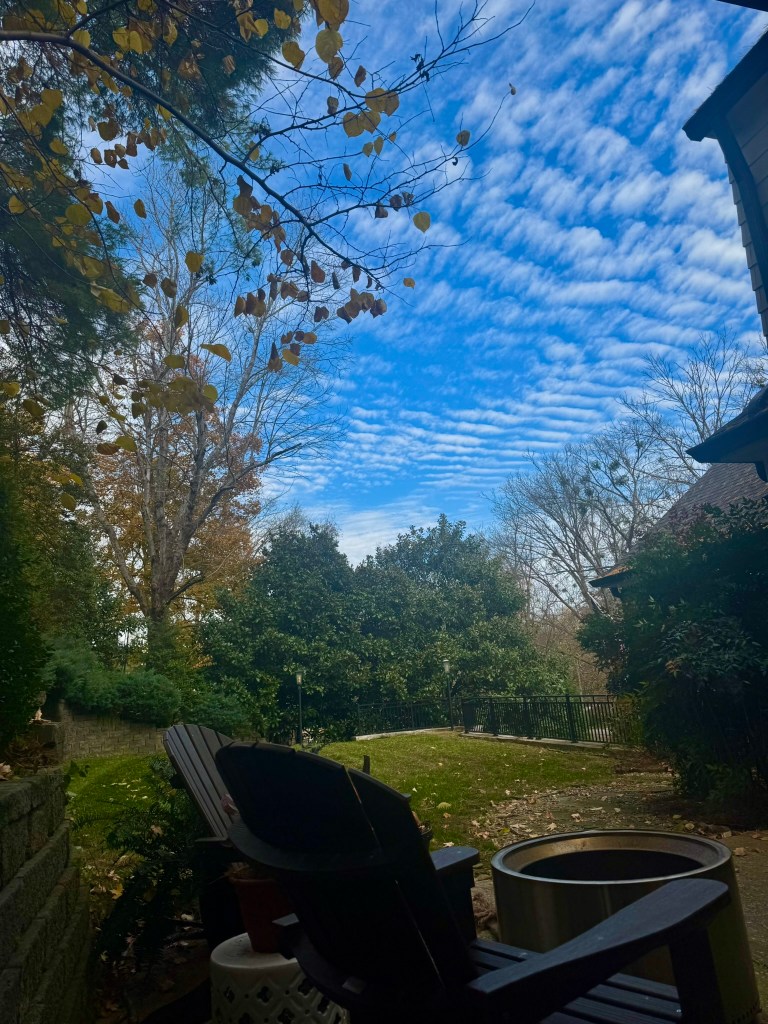
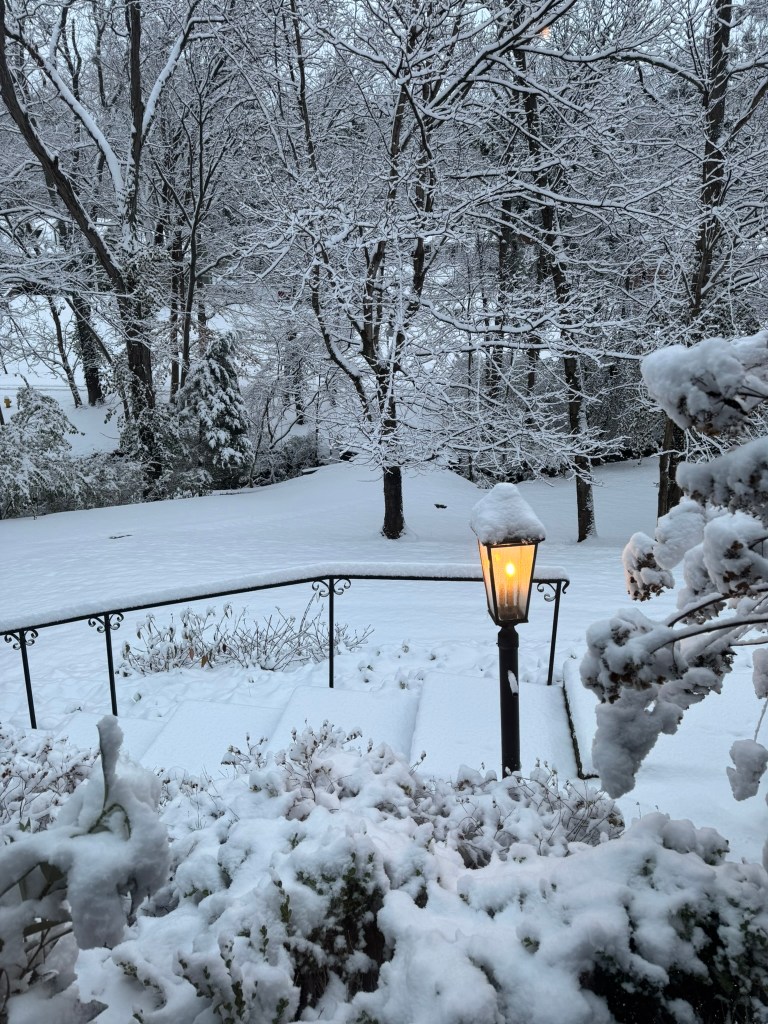
So what do we do with all this—our ancient wiring, our overloaded systems, our very human need for a slow walk in the woods in a world built for speed? We start by remembering that awareness itself is our superpower. Once you understand the mismatch, once you see that your exhaustion is biological—not a character flaw—you can stop blaming yourself for struggling.
You’re not weak.
You’re running an operating system that wasn’t designed for this much noise.
And that means the path forward isn’t about “trying harder.” It’s about making different choices.
- Instead of living in constant fight-or-flight, we can create moments that activate our parasympathetic, restorative systems: breathing, nature, quiet time, unhurried connection, restorative rest. These aren’t luxuries we should feel guilty about—they’re necessities.
- Instead of chasing endless “more,” we can begin asking: What truly makes me feel alive?
- Instead of letting technology dictate our pace, we can reclaim what biology has always told us: humans thrive best in steady rhythm, not perpetual acceleration.
So here’s the real invitation: Make room for joy. Make room for stillness. Make room for the parts of you that don’t produce, perform, or progress in any measurable way—but make you, well… you.
Your life is allowed to feel like life.
Your days are allowed to feel human.
And you don’t need to earn rest, joy, or stillness.
You need them because you’re made of breath and bone and memory—not metal, wire and code.
You aren’t a machine.
You never were.
And the moment you stop trying to live like one, something remarkable happens: clarity returns, energy levels out, and meaning—long buried under urgency—rises to the surface again.
This is the turning point.
This is where the healing becomes possible.
This is where the story shifts from merely surviving to fully living.
Ram Dass once said:
“Everybody is driven to go for more until they can, in the depths of their inner being, say, ‘This is enough.’ And they can only say that when it is.”
That’s the truth of our constant striving.
We don’t push because we’re greedy or ungrateful. We push because something in us believes we haven’t arrived yet. More effort. More growth. More proof.
The striving feels necessary. Like survival.
And still, the voice in our head says: Not yet.
You can feel it in your body—the shoulders that won’t drop, the jaw that never releases. A quiet sense of incompleteness or uneasyness that follows you even on your good days.
Enoughness can’t be achieved. You can’t think your way into it.
It doesn’t come from the outside. It arises when you finally believe what your mind has long suspected: you’re already where you’re supposed to be, still breathing, still worthy of letting it be enough.
That realization rarely comes through effort. It comes through exhaustion. Through the moment the performance falls away and nothing very essential is lost.
You don’t have to keep proving. You don’t have to keep reaching. Rest was never a reward—it was always available.
If you pause now, you may notice where you’re still holding on tight. The subtle tension of trying to stay ahead.
What would it feel like to let that soften, just for a breath?
A Poem to Carry With You
We are not the sum of our schedules,
not the blur of our busy days,
not the dings and pings and glowing screens
that beg for pieces of our attention.
We are breath and heartbeat,
sunrise and memory,
unfinished stories wrapped in complexed emotions.
We are adventurers learning to walk slower,
listeners learning to hear again,
souls learning to lift our faces toward the light
after too many hours bent forward in a digital world.
The river of life rushes fast—
but we don’t have to.
We can choose to linger on the quiet banks,
soak for hours in the deeper waters,
cherish those moments that remind us
we were made for livin’…
not just for endurin’.
So pause here with me,
in this small, fully human place, and remember:
Your presence is the gift.
Your story is the bridge.
And we belong to each other more
than the noise would ever let us believe.
Join the Story, Share the Story
If this message touched something in you— if it reminded you to slow down, to reclaim what matters— stay connected with us at The Story of Us Project.
Subscribe, follow, listen, read— whatever keeps you grounded and growing.
And if someone in your life is overwhelmed, tired, or navigating the same digital tide we’re all trying to survive…share this with them.
A friend, a parent, a partner, a coworker— anyone who might need a reminder that
They are human,
They are worthy,
and that they aren’t alone.
We rise by remembering each other.
We heal by telling our stories.
And we find our way forward—
together.
Come be part of the conversation. Come be part of the community. Come be part of The Story of Us.
 The Story of Us.
Leave a comment